Hello class,
We are finally here at the end of the term. It has been a awesome journey and to those that graduated or will graduate this summer I wish you good luck out there in the world. I hope that this program has enlightened you and that you have found what you were looking for in graduate school. For our final blog posting we have three videos from TED featuring Daniel Kraft, Sheryl Sandberg, and John Maeda. My favorite out the three is John Maeda. He talks about how art, technology and design inform creative leaders. He talked about how art, technology and design intersect, overlap and how he's looked to combine the four areas into a synthesis. He talked of the early stages of technology like the Apple II computer and how the pattern we have been following all these years his been text, video, audio, etc. As someone who was born in the 1984, I have seen technology advance in a way I never thought possible. When I was growing up we didn't have internet in the palm of our hands now we've got smart watches, cars with wifi built in and it is just an amazing time to live in now as you get to experience this ever expanding growth of technology. We all in this are future strategic communicators and I implore you to go out there and make a difference. There are so many things to do in this field such as creating news, pushing information to the public, delivering news and media to the public and studying the interplay of media and society. I hope that you all find the place that you want to be. I will be continuing my blog long after I graduate. I have found it to be alot of fun. Good luck to you all.
Saturday, May 16, 2015

Sunday, May 10, 2015
Measuring strategy
Hello class and welcome to my week 8 blog. Our term has winded down very quickly and there is only one more blog posting after this one. This week we will be talking about the measurement of communication strategies, how our body language affects how people see us.


After developing your strategy plan and having a clear road map designed your next step is to put your plan into action and manage the process as well as the plan's performance. Creating good, solid measures is the next step to developing your performance scorecard. Measures should be relevant to the goal and strategy, placed in context of the target to be reached in an identified time frame, capable of being tracked period after period and owned by the person who's responsible for the goal. Now if you really break it down there are different types of measurement. They are efficiency, outcomes, quality and project measures. Efficiency measures are productivity and cost effectiveness measure as ratio of outputs per inputs. Some examples include turnaround time per application processed and number of students graduating to number of students enrolled Outcomes measures are the end result of whether services meet proposed targets or standards and demonstrate impact and benefit of activities. An example includes the percent increase in internships and the application to enrolled yield rate. Quality measures are gauge effectiveness of expectations and generally show improvement in accuracy reliability, courtesy, competence, responsiveness, and compliance. Examples of this are quality measures including number of audits with no findings or within a range of accuracy. Lastly, project measures show progress against an initiative that has a terminus. It is usually stated as the percent complete. Determining measures can be difficult. You don't have to stand over and finding the best measure. Start with the most obvious and easiest to collect. As you work with your plan you can refine your measures.
Fostering an organizational culture that values data starts with having a plan. The trend towards an increased emphasis on leveraging data will only increase. As budgets tighten and scrutiny increases, marketers can continue to develop strong relationships with their customers in new and exciting ways.
Body Language says alot

First off lets talk about one of the TED videos from Amy Cuddy, who is a social psychologist. She shares and and easy way that anyone can change not only other's perceptions of them, but the way they feel about themselves. I know I find myself being under alot of stress constantly and Amy's research showing adopting the body language associated with dominance for just 120 seconds can increase testosterone by 20% and decrease stress by 25%. I think this could definitely help me when I'm going to job interviews because I like alot of other people get really stressed when you are at a job interview. Nowadays you have more than one person in the room being interviewed and watched by them all at the same time. You have to build trust with people by demonstrating competence and power while also demonstrating your warmth. You must be able to relate to them. Using Obama for a as an example, the president does a great job at being approachable and warm natural smiles even breaking into song with a little bit of Let's Stay Together by Al Green, He comes across as strong without being an over-aggressive alpha. When it's it time to be really powerful non verbally and when it's time to play it down a little bit, he knows how to do it well.
Creating strategy
Marketing demands a new measurement mindset to wrestle with the new kinds of data generated. For years marketers have relied on the pre-post lift analysis of the standard for evaluating a marketing campaign. Some projects now require a more iterative approach to match performance-oriented marketers. So establishing a measurement strategy begins with a drafting a strategy. You can compare that to writing down what you already know. You need to think about role data plays into it. There are four steps to consider when creating a measurement strategy.
First you must Align the plan. Establishing goals and measures at the start of the project ensures ways to evaluate the success of a marketing project. By aiming for an acceptable outcome can inform the subsequent understanding of success. You must draft a measurement plan by linking goals and measures to a measurement plan b ensuring an ability to evaluate progress. The steps include identifying the date sources to be used in inform the goals and measures, defining the parties responsible for capturing and delivering the data, the frequency and method of delivery, the recipients of the data and the decisions the date will inform. Selling the strategy would be the next step. By replacing time-driven conversations about deadlines with conversations around the actions being taken to deliver against results. Position projects with the language of increase instead of talking about launching a website. Simple shifts in language remind the team about performance. Finally, the last step is to revisit the strategy. Always make sure to revisit your measurement strategy at regular intervals to discuss which data is useful, which data is missing, and which data we no longer use to inform the work. Take time to determine if current frequencies fit the current operating rhythm of the team.
Measuring strategy

Fostering an organizational culture that values data starts with having a plan. The trend towards an increased emphasis on leveraging data will only increase. As budgets tighten and scrutiny increases, marketers can continue to develop strong relationships with their customers in new and exciting ways.
Conclusion
As Strategic communicators, we will encounter a number of things whether it be failures, crisis etc. Our overall success is measured by how we handle these events and situations. I know already I have had my fair share of failures but rather then giving up, I have learned from those mistakes and have become better because of it. There is always so much more to learn about strategic communication and even long after this class is over and we graduate from this program we will continue to learn. It is critical that you measure the results of your content marketing activities so you can continually learn what your audience likes and use that information to continually improve. The result of that will bring happier prospects, happier customers and happier management.
Sunday, May 3, 2015
What is the plan in handling a crisis, and how to adapt to an ever changing world
Hello class, (and fellow communicators) and welcome to my week 7 blog. There are just two weeks left in the term and to everyone who will be graduating next Friday from Troy University I say congratulations to you all. This week I will be discussing leadership, media strategies, crisis and change. I will mostly be discussing crisis communications and how leaders should handle a crisis and how to change to a rapidly changing technological world. So, what is crisis management/crisis communication?

Crisis Communication
Crisis management is the process by which an organization deals with a major event that threatens to harm the organization, its stakeholders, or the general public. This is the most important process in public relations. The elements most common to a crisis are a threat to the organization, the element of surprise, and a short decision time. Organizations have to have a plan to deal with threats before, during, and after they have occurred. One of our videos to watch this week was from CIPR TV and they talked with Neil Chapman, founder of Alpha Voice Communications and formerly employed at BP, where his role was in the unified command center in the US and was responsible for responding to the Deepwater Horizon explosion and oil spill in the Gulf of Mexico. He discuses how this was a human tragedy because eleven people died and that it may not have been talked about as much had it not been also a huge environmental disaster. He went on to say that this disaster wasn't one that happened and the could PR it and deal with the results. The fact that it seemed like it would never end and there was an unending demand for information on how to fix this disaster. So, what could BP have done differently? Well for starters not acknowledging the problem initially. They consistently underestimated the magnitude of the spill by claiming to be out of the loop about decisions and processes on the rig. The company also failed to empathize with the plight of those most affected by the spill. This affected families because people died and it affected the livelihoods of people in the fishing industry.
The CEO should know how to deal capably with the public relations dimensions of a crisis. Simply stating that you don't deal with decisions on the rig and being out of the loop was not a good thing to say. It shows the disconnect that the corporate heads have with the work that actually goes on in the company they are supposed to be representing. A CEO should be knowledgeable about the basics of the company. It's impossible to learn every single detail about a company but at least they should have an idea of what's going on in the front lines.

The CEO should know how to deal capably with the public relations dimensions of a crisis. Simply stating that you don't deal with decisions on the rig and being out of the loop was not a good thing to say. It shows the disconnect that the corporate heads have with the work that actually goes on in the company they are supposed to be representing. A CEO should be knowledgeable about the basics of the company. It's impossible to learn every single detail about a company but at least they should have an idea of what's going on in the front lines.
Taking ownership and leading in a crisis
One of our articles of reading this week talks about leaders and how to lead in a crisis. This brings me to Nintendo of all companies. (I name them alot because I am huge video game fan since childhood) The president of Nintendo, Satoru Iwata, has taken a pay cut every couple of years when the company has suffered from a downturn in profit. The company has since returned to profitability with its combined Wii U and 3DS sales. We need more leaders that are willing to take ownership when something goes wrong with their company or if there is an issue. Leaders should know how to ask for help in solving problems and not try to do it all themselves. Just like Iwata taking ownership for the failures of his company other CEOs and presidents should be willing to sacrifice to before asking others. I've seen companies fail to the point of being shut down but the executives were still getting big bonuses while the employees down the leader were suffering.Creating Communication strategies with social media
Social media sites such as Facebook, Twitter, Instagram, and YouTube have become a way for companies to communicate with the general public in a much faster way then doing press conferences etc. It has become imperative that companies have a team of people specifically for the purpose of monitoring online what people are saying about them and dealing with and addressing the issue immediately to avoid further controversies. The people that you hire for this position should be highly trained in the strengths of each site doing additional research if need be to determine relevancy. Find your ideal community by knowing who they are and where they like to interact. You should also know which social media tools your ideal community favors. Social media is a powerful tool for increasing your visibility and connecting with others that are not in your local area. Being consistent and real will expand your influence and connect you more quickly to those who need what you have to offer.
In closing I say this to you, our world has changed so much even in just the last couple of years. (You know I just read an article about NASA accidentally creating a wrap drive read it here http://www.newsmax.com/TheWire/nasa-warp-drive-spaceship-mars/2015/05/01/id/641944/) Being a effective leader, having a crisis management plan when things go back and keeping up with the ever changing times are key to being successful and remaining successful.
Keeping up with the times
Effective communication is key to having a successful company and effective leadership is key to your company remaining successful. Knowing your team, sharing your victories and defeats and being a good listener are just a few key items to being a good leader. Eddie Obeng in the TED video this week spoke about the world changing and that creative output can't keep up. He spoke on companies having ideas about companies having ideas and delivering on them two years after its inception and becoming obsolete before these ideas are published into any book. "Global is the new scale" says Obeng in the TED video. You have to think of the future. "You can't solve last year's problems without thinking about the future" says Obeng. I agree with that. You have to be prepared and be certain that the problems that you solve now don't come back later in the future.In closing I say this to you, our world has changed so much even in just the last couple of years. (You know I just read an article about NASA accidentally creating a wrap drive read it here http://www.newsmax.com/TheWire/nasa-warp-drive-spaceship-mars/2015/05/01/id/641944/) Being a effective leader, having a crisis management plan when things go back and keeping up with the ever changing times are key to being successful and remaining successful.
Sunday, April 26, 2015
Development of messaging, the strategic communicators way
Hello class (and others) and welcome once again to my media is on the rise blog. This week I will be discussing the development and placement of messaging, the strategic communicators way. First of all, in order to have a successful and compelling message is having a focused communications plan. A successful strategic message will define and prioritize the audiences. Let your audience know who will receive the messages and focus on the common ground between them. Identify where key audiences are coming from by gathering their information needs so your messages can influence and drive appropriate action. Agree on having a clear and compelling message about the topic. This way you are not confusing the audience that you are trying to target. Connect with your audience by letting them in and letting them know what is important to you. By delivering your messages with confidence they will hit their mark and you can continue to improve your platform and master your delivery. In this weeks TED video, Morgan Spurlock talked about going to all of these different brands and trying to get them to come on board for his film that would focus on brand marketing. He didn't just want their brand in the movie he also wanted them to finance the film. Alot of the brands turned him down because either they didn't understand the concept, didn't know how receptive people were going to be about the film, or didn't want to spend the money. One guy said up front that he thinks that most of the responses would be no. Another pretended to be interested until the camera was turned off. I think it was up to 500 companies that said no because they would have no control of the final product. The point is that Morgan Spurlock remained persistent and eventually was able to get 17 brands to come on board. The film ended up premiering at the Sundance Film Festival and it gained alot of momentum. I bet those companies that said no are wishing they had been apart of the project now.

Another thing that Morgan Spurlock mentioned in the video was transparency and I gonna talk about that for a little bit. Well first of all what does transparency mean? Transparency implies openness, communication and accountability. Transparency is operating in such a way that it is easy for others to see what actions are performed. The thing is people talk about transparency all the time whether it be politicians, CEO's, or the president but when it is actually time to be transparent people become scared. Becoming transparent is unpredictable and people think that being transparent will show something that they don't want to be seen. Transparency should be embraced though. A little honesty can go a long way especially today. People don't like being lied to and things being kept a secret because when it does come out it be alot worse then if you had been upfront from the start.


Transparency
Repeating messages
I see messages get repeated all the time whether it be advertisements online through social media, television, newspapers etc. but what happens over time and what is the attitude toward messages that are repeated over time. When a message is repeated a moderate number of times the attitude change can be favorable. With more exposure such as a certain song in rotation everyday,a movie trailer playing during every commercial break or an advertisement popping up in your Facebook news feed, that gain is lost. With too frequent exposure people become bored or feel their freedom is threatened and react by generating negative thoughts. Attitude change is related to position and frequency of exposure. Having a moderate repetition condition can have a more favorable attitude towards that exposure.
Product Placement
Product placement stands out as a marketing strategy because it is the most direct attempt to derive commercial benefit from the context and environment within which the product is displayed or used. Product displacement is used to accommodate sponsors that refuse to allow their products to be used in non-flattering settings.
Today's marketers are looking for alternative approaches to communicate with their target population. I remember back when the Nintendo Wii launched in 2006 and from then until about 2009 they had a campaign called the Wii would like to play campaign. These commercials were so creative in that in had to Nintendo executives driving around going to peoples houses and knocking on their door telling them Wii would like to play. They would then play the Wii console together whether it being Wii sports, Super Mario, The Legend of Zelda etc. Everyone instantly understood what the Wii console was about and was a big reason why it ended up being the best selling console of the last console generation (Wii, Xbox360, Playstation 3) The campaign would go on to win the 2008 Effie Award for New Product or Service. That was a great way in my opinion of product placement.
Product placement is not a new promotional tool. As early as the 1800s product placement has occurred. Product placement has a wide range of promotional applications. Researchers have examined the effectiveness of product placement with respect to brand recall and recognition and audience attitudes.
Films have been the most frequently studied vehicles for product placement. Furious 7 came out earlier this month and I've seen some people complaining about Corona beer being everywhere in the movie. The Avengers: Age of Ultron is coming out May 1st. It is the sequel to the Marvel's The Avengers that was released in 2012. It is expected to be the biggest movie of the summer and will probably beat the first movie as the third all time highest grossing movie. I can only imagine how much product placement will be in this movie seeing as how the first had alot from Acura. Prominent placements achieve high awareness, but result in negative consumer attitudes and thus low purchase intention whereas the effects of subtle placements are typically opposite which is what I mentioned earlier about not giving consumers so much of your product that you end up hating it. All in all, the right amount of product placement can go along way of your product being a success.
Sunday, April 19, 2015
Leadership and Management, why we need both
Hello class (and everyone else) and welcome back to my blog. This week we read about leadership and management. Today I will be talking about why you can'y have one without the other. First lets go over the basics. What is leadership? What is management?
 Leadership is the process of social influence in which a person can enlist the aid and support of others in the accomplishment of a common task. That can mean alot of things. There are those that simply follow someone because that leader has charisma that can't be ignored, or the one that I like is someone that motivates people and organize them to achieve a common goal. Leadership is about having a vision, being enthusiastic about that vision and remaining vigilant because everyone might not see your vision or understand it the way that you do. Martin Luther King had a vision of equality for all races. Other people believed in this vision as well and they followed Martin Luther King and attended marches, boycotted buses etc. A great leader that has qualities above in the picture can try make a difference in the world. There is also price to consider. Since the recession, it has been difficult to get businesses off the ground. Then again when is it ever a good time to start a business. In order to be successful leader and launch a successful business you need a supportive team that believes in you vision. That goes back to what I mentioned before about leaders getting people to understand their vision and follow them. Leaders like Steve Jobs who founded Apple which is now a multinational technology company. I bet his old partner Ronald Wayne wishes he hadn't sold his share of the company for $800.


Looking towards the future and finding the people to manage that dream
Leaders in business are always looking towards the future. To create a vision for their organization, they focus on the organization's strengths by using tools such as Porter's Five Forces, Core Competence etc. to analyze their current situation. Leaders look to how they can innovate successfully and shape their businesses and their strategies to succeed in future marketplaces. In a way leadership is proactive. You deal with problem solving, looking ahead and not being satisfied with things as they are.
Management in business is the function that coordinates the efforts of people to accomplish goals and objectives using available resources efficiently and effectively. Where is leaders have a vision and work toward making that vision a reality, managers job includes planning, organizing, staffing, directing and controlling an organization to accomplish the goals. The reason I say that you need both leadership and management is because some leaders don't make decisions when it comes to the management side of things and some managers are not leadership material. They know how to plan, hire staff etc. but lack the charisma or skills to be a true leader. Like a CEO for a company has a board or how the president of the United States has congress, these leaders have "managers" so to speak that they have to go to to get things approved.
There are some that have difficulty knowing the difference, especially in this new economy. Workers are no longer a part of the machine that works and asks no questions. People look to management to define for them a purpose. In most cases whatever company you work for you will never meet the CEO or the founder of the company so management is who they look to for leadership. With workers being more knowledgeable then in the past they have come to expect their managers to lead with the goal of making specific strengths and knowledge of every individual
Breaking down the difference
Lets really break it down now. Mangers have a position of authority given to them by a company and their subordinates work for them and do as they are told by management. Workers do as they are told because the reward is getting their salary for the day, their paycheck on pay day and that they keep their jobs. Mangers get paid to get things done under tight constraints and pass that pressure on to their subordinates.
Following leaders is a voluntary act. Leaders do not have subordinates. Leaders give up their formal authoritarian control which again is because following the leader is voluntary, you don't have to if you don't want to. Telling people what to do is what managers do but bossing people around does not inspire them to follow you. You have to appeal to people, showing them that your way can lead them to what they have always wanted. Leaders with a strong charisma can get people to even follow you into dangerous situations that they would not normally consider risking.
Closing
I have found myself at my own job looking at management for leadership. I have an assistant manager, branch manager, and manager above them that I know, the area manager. It's a continuing cycle until you reach the top which would be the Taylor family since I work at Enterprise Rent-A-Car. I have never and probably will never meet a member of the Taylor family but I can understand what Jack Taylor (the founder of Enterprise) was trying to do. Alot of people probably thought he was crazy for focusing on the hometown market while his competition was focused on rentals at airports but he had a vision and it worked. He began offering home pickup services which eventually became the slogan "we'll pick you up". He started out with 8 cars and now there are over 1 million cars worldwide. (the acquisition of National and Alamo Rent-A-Car in 2007 had something to do with that) In today's business alot of managers have had to step up to the plate of leading as well. The way my job is setup each Enterprise is its own business with its own budget and decisions being made by our branch manager. You quickly learn how to run a business and be a leader.
Sunday, April 12, 2015
Communication
Hello class and welcome to week 4's blog posting. We are half way through our 9 week term for this class. For those of you that are taking 6699 this term I hope you did well on your comps exam. This week we are discussing communication in terms of internal, external and government communication. We are also discussing leadership. Lets start with a simple question, what is communication? It is the imparting or exchanging of information or news. In regards to media it is the collective communication outlets used to store and deliver information or data. But how do you use it in terms of internal, external and government communication? That is what I will be discussing mostly for today's blog posting.


Internal Communication
The definition is the function responsible for effective communication among participants within an organization. Having a strong internal communications strategy can ease an escalated situation. Take for instance our discussion point this week. We discussed the poisoning of the Toomer's Corner trees at Auburn University and how both Auburn and the University of Alabama needed strong communication strategies to ease the minds of the faculty, students, fans and alumni that they were doing everything in their power to fix the situation and distance themselves from whoever was the cause of the crisis. I've seen crazy things from fans of sports before bur never have I seen something as insane as poisoning trees because your team lost. Maybe one day people will realize that it's just a game. Try again next year lol. Internal communication can also be used in social media especially for larger organizations. By upholding the momentum of employee relationships, (instant messaging, support forums etc.) ultimately you can remain profitable in the company. Most companies today have a clear social media policy because those employees can use social media to further reach out to companies but also the policy is in place so employees know that they are representing a company and that there are limits to what they can post while they work for the company. For instance, I've heard that Nintendo doesn't allow you to post things to your twitter account that isn't Nintendo related or the WWE superstars being able to only post things mostly that relate to WWE in some way and of course no talking about any issues or problems you may be having as that will get you in deep trouble, Dolph Ziggler being a perfect example as a wrestler that is always on the verge of becoming a main even talent only to be brought back down because of something he said in the media about the company. ( He's a two time world heavy weight champion though the first reign lasted an hour and the second about three weeks)
One of the articles we read this week comes from the Wall Street Journal and it talks about a Korean firm building an internal system for workers to communicate. By tweaking twitter the senior executive was able to send out a tweet to find lunch partners but only the employees of the firm received it. They call it BizTweet. I work for Enterprise Rent-A-Car and have for the past 7 years. I hoping with the strategic communication degree I'll finally be able to move on from the company anyway the reason I bring Enterprise is because we have a social media like site that can only be accessed internally. Its called the hub and you are able to search for a befriend follow employees, like comment, post status updates etc. No one at my branch uses it and most people don't even know about it. I myself only use to access the companies discount page. I doubt it will ever take off as most people are friends with each other on Facebook.

External Communication
While internal communication deals with communication within an organization, external communication is just the opposite, it deals with communication going outside of the company to the general public. Look at the diagram above. It list both oral and written external forms of communication. Say a company is ready to launch an new product, they would hold presentations and also advertise it through the media, press releases, social media etc. The frequency of external communication is less frequent than internal, its coverage is broader and there is a significant distance between the receivers of the communication. I think during the whole Donald Sterling scandal the NBA handled their external communications very effectively making it clear that they did not tolerate that type of behavior nor were they going to stand by Sterling. NBA Commissioner Adam Silver delivered the swiftest, strongest, and harshest penalties probably in the history of U.S. sports by fining Sterling $2.5 million banning him for life from the NBA and the Clippers organization, and asking the owners to agree to his recommendation that would force Sterling to sell the Clippers which is what ended up happening. I also believe that the swift action was the result of learning from the NFL's blunders regarding the Ray Rice situation and them seemingly trying to cover up the incident.
Government Communication
Government communication deals with all activities of public sector institutions and organizations that are aimed at sharing information for the purpose of presenting and explaining government decisions and actions, defending recognized values and helping to maintain social bonds. (man that was a mouthful lol) Government communication deals with government institutions, public sector organizations presenting a very broad range of forms. We have government wide communication which is tasked with explaining decisions, presenting actions and contributing to debate over government's values and objections. Say the government wants to implement a new policy and the general public doesn't understand why and are confused. The government can then (depending on it being local, state, or federal) hold a town hall meeting, press conference, live stream, newspaper article etc. Every form of media should be used because everybody gets their media in different ways. You know I find myself paying more attention to the government's activities now then I have in the past. I'm interested in seeing what the government is going to do about the police and their willingness to use excessive force when it isn't necessary and suffering no consequences. Well everyone I thank you for reading my blog this week. You know there is five weeks left in this class so come on down next week for the next blog posting. Until then.
Sunday, April 5, 2015
So simple but so complicated, Listening
Hello class and welcome to week three of this class and with a new week comes a new blog. This week we have several readings and videos that we went over such as videos going viral and how to engineer them, public relations and journalism, social media and having a strategy for your organization in this new world of technology driven people and the one that I will be talking about mostly on this blog (and probably the most important) listening and what to do if your skills are lacking.
 Take a look at the chart above. Listening accounts for 45% of communicating. More that speaking, reading and writing. If your listening skills are lacking, then your other skills will suffer as well. How can communicate back to someone about some thing they said if you can't listen? Fortunately there is someone that can help. Dr. Kline wrote a book entitled Listening Effectively. In our first communication leadership assignment we were tasked with discussing how communication professionals can use listening skills to help communicate in internal, external and government environments. (This also applies to anyone that lacks in listening skills)
 Before you can improve your listening skills you must first come to accept the fallacies about listening. Never assume you have the best listening skills around. I have thought this about myself as well only to discover that I didn't listen as effectively as I could, missing out on critical components during lectures as an undergraduate and having to ask my classmates what I missed. After recognizing the fallacies of listening you can then come to understanding the process.That process comes in three steps receiving, attending and understanding. One thing that I really like and have come to understand from Dr. Kline's book is that listening and hearing are not one in the same. Having excellent hearing does not mean you have great listening skills. To be an effective listener in the communication profession, you must be able to get the important parts of conversation out. You most be able to communicate to each level of the corporate ladder from the CEO to the lowest level employee.

There has never been a time such as now that customers have such a prominent voice in the direction a company takes. Take a look at the chart above. It states that by 2020, companies using social media to respond to customer inquires will increase to 90% Listening to customers on social media and on their own websites has saved some companies from going out of business. This embrace of social media has taught brands that listening to what is being said about them online is crucial for guiding decisions about their services, marketing, operations and budget. A perfect example is Gatorade. They opened the Gatorade Mission Control Center in the middle of their marketing department. This allows them to monitor conversations about Gatorade and topics relevant it in real time. In our discussion points this week I mentioned this mentioned the same thing about real time. Being able to monitor and speak on issues that customers may be having in real time has changed the way companies handle their public relations. This also increased their product education by 250 percent and reduced their exit rate from 25 to 9 percent.
Another of my favorite companies, Best Buy has began focusing on its customer reviews. They are now sharing feedback with vendors and are rewarding some customers with special points to use toward future purchases.
Not ever company has success with social media. One of our readings this week is titled, Corporate Facebook pages: when "fans" attack. It talks about an incident that occurred in 2010 when Nestle began to get linked to companies involved in the destruction of forests and peat lands in the southeast Asia. Nestle committed to stop using products that come from rainforest destruction but their response on Facebook was anything but sympathetic. Their moderator gave back sarcastic immature banter about customers comments and deleted customers comments and pictures. This sent people into a frenzy and let the moderator have it. He finally apologized but the damage had already been done. I'm sure their public relations departments was up all night figuring out how to fix that situation.
Companies "Listening" to their customers
Another of my favorite companies, Best Buy has began focusing on its customer reviews. They are now sharing feedback with vendors and are rewarding some customers with special points to use toward future purchases.
Not ever company has success with social media. One of our readings this week is titled, Corporate Facebook pages: when "fans" attack. It talks about an incident that occurred in 2010 when Nestle began to get linked to companies involved in the destruction of forests and peat lands in the southeast Asia. Nestle committed to stop using products that come from rainforest destruction but their response on Facebook was anything but sympathetic. Their moderator gave back sarcastic immature banter about customers comments and deleted customers comments and pictures. This sent people into a frenzy and let the moderator have it. He finally apologized but the damage had already been done. I'm sure their public relations departments was up all night figuring out how to fix that situation.
Going Viral
First of all, let me start off by saying that sites such as YouTube have come a very long way. I remember when YouTube first got started and people started sharing videos. Who would have known that it would grow into the monster that it is now. I wasn't surprised that Google purchased it. Anyway, what is going viral you ask? Going viral is when a video becomes popular through internet sharing which is why I just named YouTube because it is the biggest video sharing site. I started my YouTube page back in 2008 and a few years ago when it became integrated with Google, I had to sign up an email account. I still have that original page where I have shared hundreds of videos, mostly music and video game related being that was my only interests at the time. One example of finding success from YouTube is Justin Bieber. He posted videos on YouTube and got discovered by Usher. Rumor has it that Ne-Yo actually discovered him first but thought he was too young at the time to get into the music industry.
Conclusion
Listening is so simple but so complicated right? I've caught myself going into my own little world before and have to snap out of it. Everything that I have discussed today goes back to that simple concept. Listening to your audience, listening to your customers, going viral, etc. It all goes back to somebody listening and spreading the message. Things have changed so much even from just a few years ago. One other off topic but kinda on topic thing has to do with the WWE. I don't know who all watches WWE programming but there is a wrestler named Daniel Bryan, who is one of the biggest stars on the roster but was continuously held back in WWE even with his "Yes" chant taking the world by storm. From not being in the royal rumble match last year to being taken out of main even caliber matches the fans had had enough and voiced their opinion every night by chanting Daniel's name during the entire program or during boring matches and segments. The Randy Orton, Batista main event was going to get booed out of the building at Wrestlemania 30. The WWE finally caved,listened to the fans and gave them Daniel Bryan in two matches one against Triple H which he won to get inserted into the main event in a triple threat match which he won to become the champion. So, you see fans, consumers, etc, have more power than ever. Knowing how to satisfy your consumers goes back to one thing, listening. Hope you all enjoyed my lastest blog and look out for more interesting blogs to come.

Sunday, March 29, 2015
Opinion Leaders and how they influence
Hello class and welcome to my second blog posting for my COM 6610 Leadership and Media Strategies class. Last week I discussed the diffusion of innovations and how us in the Asset-Light Generation (I say us because I am also a part of this generation) are stateless and have everything available for use on every device in every location. Everyone in class or not in this class are welcome to check out all of my blog postings at this link http://newmediaisontherise.blogspot.com/

An opinion leader is defined as an influential memeber or members of a community, group, or society to whom other turn for advice, opinions, and views. In relating to diffusion of innovators they would be considered early adopters that pass on information about new products to the late adopters or laggards. In our readings this week one article that I found interesting was about Starbucks and how they turned the company around after falling on hard times in 2008. They used social media (Facebook, Twitter, and their own website) to ask customers what they liked, didn't like, what needed to change, and it was a platform for customers to vent their frustrations. It worked because the company was able to get back to profitability by listening to their customers and in the process becoming a major opinion leader. They also were able to use social media to stop rumors or anything that could hurt the company if left out in the wild so to speak.

What is an Opinion Leader?
This week we are talking about opinion leaders and how social media has made it easier than every to be an opinion leader. That leads to my subtitle, what is an opinion leader?
Lights, Camera, Inspire Action
We had several readings this week, but also a couple of videos from the TED website. I found both to be very insightful but one in particular is the one from Simon Sinek.
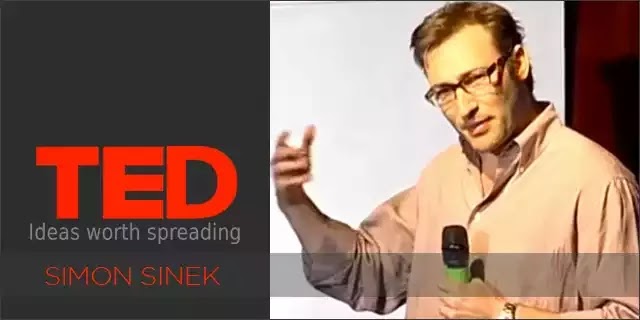
Simon Sinek is an author who is best known for popularizing the concept of "the golden circle" and to "start with why". Simon Sinek is a great example of an inspirational and opinion leader. In the video, he talks about how great leaders such as Martin Luther King Jr. and the Wright bros. were able to persuade into believing in their innovative ideas. The reason I say lights, camera, inspire action is because opinion leaders can be very powerful. I believe they have a responsibility to put out the right message and not sway people to believing their views just for the sake of having followers on your side.
Simon Sinek is an author who is best known for popularizing the concept of "the golden circle" and to "start with why". Simon Sinek is a great example of an inspirational and opinion leader. In the video, he talks about how great leaders such as Martin Luther King Jr. and the Wright bros. were able to persuade into believing in their innovative ideas. The reason I say lights, camera, inspire action is because opinion leaders can be very powerful. I believe they have a responsibility to put out the right message and not sway people to believing their views just for the sake of having followers on your side.
Negative effects of Social Media
Now as good as social media has been for everyone and how it connects people all over the world there are negative effects of social media. Say an opinion leader says something thinking that they are off camera, or no longer miked and someone in the audience happens to be recording on a smartphone. That recording can go viral in an instant and severely damage that leaders reputation. His or her PR team would have to work overtime to defuse the situation but it may already be too late. Sites like TMZ, Twitter, etc. get the video and within 10 minutes its all over the internet. There is another effect though. This relates to the other video from TED that was apart of our readings this week.

Sherry Turkle, who is the Aby Rockefeller Mauze professor of the Social Studies of Science and Technology at the Massachusetts Institute of Technology, proclaimed that as connected as our lives have become, we are very much alone. Kids today aren't learning necessary social skills needed to succeed in life. They all would rather text, tweet, or post to Facebook. In a room full of teenage kids today, its guaranteed that they will all have their faces in their smartphones. I myself didn't even need or want a cell phone when I was in high school, ( this was 1998-2002) feel naked today if I leave my phone at home or if my phone dies and I can't check my Facebook page. Social media gives you a false sense of connection. You go on Facebook and sends hundreds of people friend requests and spend all your time trying to create relationships with people you don't know, the relationships that mean the most become weakened because of the lack of attention.
Decreased productivity at work has also been shown because of distractions of social media. There has been technology put in place to try to block social media sites but that does nothing for cell phone with 4G LTE internet access.
Probably the most important negative effect of social media is you privacy. Once you post to the internet, it is there forever. You being drunk at a party posted on Facebook may be funny when you are in college, potential employers may spot that same photo when you are trying to apply for a job and may decide not to hire you because of it. I know when I first started my Facebook account back in 2006 I cared little about privacy settings or anything like that. Things have definitely changed since then and not only am I careful about what I post, only my friends that I know well will actually see what I post.
Closing
You know this weeks readings really resonated with me. Simon Sinek and Sherry Turkle both made really good points. Sherry Turkle says that technology has disconnected us. She used the example of her daughter texting her to say good luck you're gonna kill it. Sherry felt like that text was the equivalent of getting a hug which is to be expected in today's technology driven world. Simon Sinek made a great point about people not necessarily following leaders for the sake of following them but believing in what they believe and thus supporting the cause. I hope that you all have enjoyed my blog this week and stay tuned for next week for the next posting.
Sunday, March 22, 2015
Adopt innovation or live in mediocrity
Hello all and welcome to my blog. My name is Dwight and I will be taking you through my journey of COM 6610 Leadership and Media Strategies that I am currently taking at Troy University's Strategic Communication graduate program. As I took 6630 Strategic Communication and Emerging Media last year, I will be continuing the use of this blog from that class. You all are welcome to view my past blogs as well as the new ones that I will be posting every week. In this class we will be examining how the changing media environment affects outreach methods and explore practical solution to achieve communication goals. In case you aren't in this class in came upon this blog by search engine or accident, the can get to this blog by typing or pasting http://newmediaisontherise.blogspot.com/


Earlier I mentioned Laggards and how they were the last to adopt to innovation. Well, they are just one of five segments of diffusion. From highest to adopt to lowest to adopt they are: Innovators, Early adopters, Early majority, Late majority, and finally Laggards. I can attest to being a early adopter. On November 19th, 2006, on a cold night, I was one of the few waiting in line at GameStop to get (at the time) brand new Wii console. It launched at midnight and I was one of the first to pick it up. It didn't take long for it to catch on and they were selling out everywhere for the first couple of years of its release. It ended up becoming the highest-selling console of that generation. (It competed against the Xbox360 and the PlayStation 3) So what are you? An early adopter or a Laggard?

Post Title
Now alot of you must be wondering what I meant about adopt innovation or live in mediocrity. Sometimes I can be a little over the top but let me explain. It's no secret that technology has advanced so much that physical things such as money, books, music, movies, etc. no longer need to be in a physical form to be used. Most people have changed with the times and have adopted new technologies to survive and adapt in this advancing technological world. There are some that have not however, and the readings that we read this week call them laggards. Laggards are the very last to adopt to innovations and are either traditional or isolates in their social system. The picture above illustrates this perfectly. The woman in the picture is using a typewriter that is decades old. Laggards are often suborn who don't believe in changing from the old ways. Millennials, (who are people who reached young adulthood in the early 2000s ) most likely have never used a typewriter. I used one when I was growing up and in high school I took a typing class using a typewriter. However by the time I got into college it had been adopted to computers. My computer concepts class that I took as a freshman taught me how to use Microsoft office and a number of other applications. Just three years prior we were still on typewriters in high school. (Just so you know this was in the early 2000s in case you all are thinking I'm old) The picture states in perfectly, don't be afraid of change.Diffusion of Innovations
This week in class we discussed and read about the diffusion of innovations. My favorite article we read is Les Robinson's summary of diffusion innovations. He explains that an innovation is an idea, behavior, or object that is perceived as new by its audience. For instance, in the last couple of years, I have noticed a number of car companies getting WiFi built into the car. The most prominent I've seen is Chevrolet. Most of their 2015 models have WiFi built into their vehicles. I would definitely call that an innovation because everyone has not adopted to these type of cars. I can definitely see early adopters that are WiFi heavy users already getting these vehicles. As most cell phone companies no longer offer unlimited data, this has to be welcome news for people who travel and use up their data quickly. (I can attest to that) Another quick example of how technology has evolved is the fact that I started typing my blog on my computer, got up to get a quick bite to eat and continue typing this blog on my smartphone through the blogger app.Earlier I mentioned Laggards and how they were the last to adopt to innovation. Well, they are just one of five segments of diffusion. From highest to adopt to lowest to adopt they are: Innovators, Early adopters, Early majority, Late majority, and finally Laggards. I can attest to being a early adopter. On November 19th, 2006, on a cold night, I was one of the few waiting in line at GameStop to get (at the time) brand new Wii console. It launched at midnight and I was one of the first to pick it up. It didn't take long for it to catch on and they were selling out everywhere for the first couple of years of its release. It ended up becoming the highest-selling console of that generation. (It competed against the Xbox360 and the PlayStation 3) So what are you? An early adopter or a Laggard?
Asset-Light Generation
Lets talk a bit about the asset-light generation. In our discussion point for this week for class we had to determine how we can use the diffusion of innovations to capture the attention of the asset-light generation. I determined that you needed to use social media, make things simple and to the point, that the innovation should have full customization to fit each individual. Now I did some additional research and cam across a blog from a guy named Donald Ham, a corporate strategy and emerging technology analyst. He calls the asset-light generation as stateless, which means that everything you own is available on every device in every location. He's definitely correct as once upon a time I carried a heavy laptop whenever I went out of town. Nowadays I carry my smartphone and tablet. I also used to use internet explorer but last year I switched completely to Google chrome. Everything I had from my phone contacts to YouTube account were already with Google so the switch was simple, plus my bookmarks, website history, settings etc. carry over to every device I use that has Google chrome and is logged into my account. I really don't know how I could have did anything without it now. Donald did give a warning though. With everything at the tip of your fingers and always accessible comes at a cost. If you lose your device or it gets stolen look out! Make sure you have a way to erase the data on the device should it get lost or stolen. You also have to deal with app and OS updates and some devices being overly complex.

Closing comments
I would just like to say thank you to my classmates, professor, and anyone else that has come to read my first blog for 6610 Leadership and Media Strategies. For the next 9 weeks I will be posting a new blog about various topics related to the class. Take care and until next time.
Check out Donald Ham's blog at http://www.infrics.com/2013/04/mary-meeker-calls-us-asset-light.html
Saturday, May 17, 2014
Farewell
Hello all! As you know this will be my last blog posting for my class. (Although I will continue to blog about different things) It has been a blast and I have learned a lot and I hope you all reading have learned a lot as well. With this last posting I will be briefly be talking about the future. We have come along way even just in the last decade. Look at all the technology that is currently around us. Smartphones, tablets, smart televisions, etc. is all a normal part of the day in 2014. As I said and talked about in an earlier posting, this new generation uses this technology with little to no instruction or effort. Almost like their born knowing how to use it while some of us from earlier generations have to relearn new technology as it comes along. I can only imagine what the next 5 to 10 years is going to bring for us and how we as strategic communicators can use this technology to make our lives and careers easier. Technology has already it possible with just a smartphone to take pictures/videos and post to any social media site, takes notes, video chat, play games, use GPS and just about anything that you can think of you can do and its in the palm of your hand. What's interesting is that the AT&T ads video that we watched showing what could be in the future has come to fruition in most cases. You can video chat, buy concert tickets online, watch movies on demand, smart watches that let you make phone calls you name it we have it today. Well class this is it. This will be my last posting for this class but as I said earlier I will continue to blog as this class has opened my eyes to how great it can be and how many people can actually read it and comment about it. Farewell class and good luck on this graduate school journey!
Sunday, May 11, 2014
Technology and how our children are using it
Hello all and welcome to this weeks journal entry from yours truly. I can't believe we are in the final stretch of the term. It has been an incredible ride and I have learned alot this term. I plan to continue doing blog entries once this class is over. There is alot that can be done with blogs as far as talking about your interests, likes and dislikes. Anyway, lets get down to business. This week I will be talking about technology and how our children are using it as opposed to how we used it when we were growing. I was born in 1984 and so I've seen technology advice alot in my 30 years. Even just ten years ago I never would've thought we would have these high tech smartphones, Nintendo Wii, HD consoles such as xbox and playstation and other technological advances. I look forward to the advances of the future. To our children though, they were born during a time where all this technology is already present. I took me into my college years to become efficient with a computer and all of its applications. My little brother who is 8 and my little sister who is 10 seem like they were born already knowing how to use technology. My sister even showed me something that I didn't know how to do on a computer. I was amazed at how smart my siblings are in the use of technology. Take for instance when I was a freshman in high school, one of our classes was a typing class. There weren't any computers though. We actually had to learn how to type on typewriters! Our children today probably don't know what a typewriter is. When I got to college I had to relearn everything about typing because it I had to learn it on the computer with Microsoft Word. That pretty much sums up the world of technology today. As soon as you learn something new, technology evolves, upgrades or simply changes and you have to learn again, you have to adapt or get left behind. Our children already have the right idea so everybody needs to take charge.
 One of our articles this week discusses the importance of cell phones in the family household. Now when I was growing up, cell phones were almost non existent. My mom did get one in the mid 90s. It's purpose was nothing like phones are now. It was a really big phone almost the size of a house phone that always stayed in the car. My mom would use it for emergencies only. Of course I didn't have one nor did I have a need for one, but times would change. When I graduated from high school in 2002, my mother bought me my first cell phone and as the years went by I became more dependent on my phone especially once I got my first smartphone. The evolution of my cell phone looks a lot like the picture above. I don't know what I would do without it now but that's how technology changes your life. My little sister has a tablet that she knows how to use very well. She also has a Nintendo DS. Not sure what she needs with a tablet but all young kids want one nowadays. I believe in some ways that all of this technology of today has made the children of today lazy. Even in my time before Google and internet exploration was so simple and fluid to use, if I had a book report, research paper, or any kind of assignment that required research being done, we had to go to the library and use research books, encyclopedias, etc. Some books you couldn't check out and so you had to conduct your research in the library or make copies of the pages you need. The work was tougher but more rewarding when you completed the assignment. Today, information is right there for you with the push or click of a button. Wikipedia, cliff notes, not sure what other websites are out there but you can search in Google for almost everything that you need to find. That has caused a lot of plagiarism I believe because children copy word for word instead of in their own words. There are good ways that children use technology. Ways that weren't possible a decade ago. With their learning and education I'd say technology has helped a ton with children that may have learning disabilities. I would even go so far as to say video games today help with hand eye coordination, quick thinking, problem solving etc. I'll use the Legend of Zelda game series as an example of those things I just named.


Everyone take a look at this picture above for a second. This is the evolution of Nintendo's home consoles and handheld systems respectfully. Now I have lived through every incarnation of their systems from the Nintendo Entertainment System (NES) to the current Wii U and from the Gameboy to the current 3DS. I spent years crafting my skills in gaming. My little sister and brother got into video games during the Wii era. They instantly became and attached and became great gamers. My sister and I play Super Smash Bros. (For those unfamiliar, it is a video game where you get to choose you favorite Nintendo character and battle it out) Now I ask how were they able to pick up video games so fast, when I myself have been playing since I was 5 years old. This new generation is smart I tell you. Anyway, lets get back to some of the educational benefits of children and todays technology.

Today's technology has definitely changed the way that we learn today. Especially for the children growing up. Technology has made it possible for students to learn from anywhere and for their teachers to easily reach them. In the very near future if not right now, almost every job will require or already requires that you have some form of technological skills and as I said earlier those who don't adapt will get left behind. Individual learning and research come to mind. You can use online platforms like piazza.com to join virtual classrooms where you ask questions and get answers on any topic. I know for me growing up I was embarrassed to raise my hand when I didn't understand something and so that would have been a big help to me. I'm sure there are kids today that experience the same feeling. Technology in the classroom can also improve writing and reading skills. With word applications such as Microsoft Word it makes it very easy to write and structure a paper without fear of mistakes because you can Google or YouTube anything you have questions about. I remember for years I couldn't figure out how to get word to remove that new page it would create when you got close to the bottom of the page you were on until just recently when I looked it up on YouTube how to remove it! I do fear that kids can become addicted to tech and become isolated from the outside world but the good definitely outweighs the bad. Parents will have to teach the kids the dos and the don'ts about tech and to also teach them to take a break from tech and go outside a play. I hope you everyone enjoyed my blog this week and check me out next week on my last blog entry for my class. As I said before I will continue to write blogs long after this class is over. Until next time.
Sunday, May 4, 2014
Effective Brand Strategy
Hello and welcome back to my blog. This week I will be talking about branding and online reputations. First I ask you this, what is branding? Well, branding is the marketing practice of creating a name, symbol or design that identifies and differentiates a product from other products. Now there are probably millions of products out there in the world and with the internet today, effective branding is even more important. The question is though how can you show the world what makes your brand special with so many other products out there? According to the article Fundamentals of Personal Branding, your product must fulfill a specific unmet need in a well-defined target audience and be perceived as special and valuable. Basically what I just said before, your product has to stand out. What is it about your product that makes it special? Whatever your product may be, you need to find your target audience. Who are you selling your product to. If you're selling grills then you market to cooks that grill, if you're selling baby products, then you market to parents, particularly mothers.
Finding your target audience
First things first. You have to find your audience for your particular product. So, how do you do that? Well first you need to start with your demographic. That includes age, location, gender, income, education, occupation, ethnicity, marital status and number of children. Once you get the basic understanding of your target audience demographic, you can then begin to target that specific audience you are trying to cater to. Now you should try to set your target to 2 core markers out of that list. That will make it much easier on your part and by focusing on a small core you can find out what's important to them. Keep focus on your target audience. Once you have made an impression with your core market, you will have to trust that everyone else will follow suit. After finding who your are trying to sell to, the next step is finding out why they are buying your product. You need to monitor you target audiences interests to gain insight into things like their lifestyle, behavior, interests etc. You need to know as much as you can about your target audience so that you can better serve your customers.Brand Personality
Another important factor is the personality of your brand. 
I found this wheel online and it basically shows you the brand archetype. Doing the research before you create the content will make your more informed and better equipped to serve your market the best way possible.
Branding on the internet
We have an article this we read this week entitled branding on the internet. In this day and age it has become increasingly difficult to do anything particularity branding without the use of the internet. There are so many different ways to get your product out on the internet. Through blogs, Facebook, Twitter, YouTube or creating your own website, you can market your product to the masses. In the article Branding on the internet, we get several stages to embracing a relationship with a company and they are awareness, familiarity, trust, and commitment. You get through these stages with prospective customers and you can get them to embrace your product and become your customer. Alot of the things that I buy is because I have seen the advertisements for them online or on television. I have been a lifelong customer and fan of Nintendo's products one, because of my memories and favorite characters of the past and present, and two because the message Nintendo puts out in their advertisements. Their brand and very recognizable and you get quality games that you can't get on any other system such and Super Mario and The Legend of Zelda video game series. Nintendo has also increasingly used the internet to for their brand. Last year and at this years E3 which stands for the Electronic Entertainment Expo, Nintendo is not and did not do a traditional press conference at the Expo. Instead they opted for a Nintendo E3 direct which streams live. They will also have some of their games at E3 available to play at Best Buys across the country, such as Super Smash Bros for Nintendo 3DS and Wii U. This new brand strategy in my opinion has been very interesting. I was at Best Buy during E3 week and I got to try out several games months before their release. I think other companies should follow suit and try a similar strategy. Information is able to pass the middle man and get straight to the consumers and that is the most important thing. Nintendo is one of the most profitable brands in the world. Companies and brands that are just starting out won't have the luxury or the history that Nintendo does. So, how does your brand get out? Well the internet for one as I've been saying earlier. Also word of mouth works. You satisfy a customer with your product and they tell their friends about it and their friends try out the product for themselves. I remember my roommate from a couple of years ago bought a PS3 and I was never a big Sony fan, but from his word and from my playing for myself, I ended up getting my own and have been a fan ever since and plan to get a PS4 by the end of the year. Once a company builds a relationship with their customers with great products, they will for the most part remain loyal to you as long as you're good to them and continue to have great products.
Will you be the next big thing?
Well that is hard to say. Most of the companies that are huge now had humble beginnings. Facebook started in a students dorm room, Nintendo was a game card company before getting into video games, The original, Playstation was the result of deal that fell through between Sony and Nintendo for a CD extension to the N64 and now they are one of the most profitable companies in the world thanks to their video game division. It all begins with an idea about a product, creating the product, getting the product out and marketing the product. Thank you for reading my blog and be back next week for my next blog. Until next time.Tuesday, April 22, 2014
Crowdsourcing, is it useful or what?
Hello all and welcome to my blog. Once again I will be talking about topics regarding Strategic Communication. This week I will talking about crowdsourcing and the usefulness of crowdsourcing. So, what is crowdsoucrcing? The definition of crowdsourcing is the practice of obtaining needed services, ideas, or content by soliciting contributions from a large group of people, and especially from an online community, rather than from traditional employees or suppliers. How can we use crowdsourcing? Well crowdsourcing can be used to gather thousands of contributors to add a contribution for the greater good of success. In our everyday lives crowdsourcing is used especially online. People who have issues with appliances, cars, smartphones, etc. you can go online and you're guaranteed to find a forum where people are expereicning the same issue and have things you can try to fix it before spending money or shipping your product back to the company that made it to fix it. I myself have been on forums for my video game consoles, my televisions, my vehicle, and my smartphone for issues I was having and in most cases I was able to get my issued resolved without having to spend money. Other crowdsourcing on the internet is a venue individuals can use to share their projects while not being scrutinized. The projects can be worked on with as little or as many people as needed or whoever wants to be apart of it. An example would be Wikipedia. Wikipedia is a collaboratively edited internet encyclopedia. Any one with access to the internet and access to the site can edit almost any of the articles. The danger in that is that all the information on Wikipedia is not always accurate and if 500 million visitors a month to the site errors and misinformation are to be expected.
Types of Crowdsourcing
There are several different types of crowdsourcing that can be used in the commercial world. These include crowdvoting, crowdfunding, creative crowdsourcing and inducement prize contests. I am going to talk about crowdfunding since I know more about this type of crowdsourcing. The reason I know a bit about crowdfunding is because I am videogamer and just like major record companies, movie studios, and video game companies, there are independent ones. Usually, an indie video game company launches a crowdfunding campaign to secure funds to fund their project and get it on the device of their choice whether that be a video game console, pc, mac, smartphone, etc. This type of crowdfunding is called a kickstarter. The Ouya microconsole is an example of the second most successful kickstarter campaign. Over $8.5 million was raised to fund the device. When people are passionate about something and they can find other people to fund their project it's almost always successful. There is a 43.99% success rate for projects thats get crowdfunded. Other notable thing about crowdfunding it's used to support citizen journalism which I talked about last week.
Another type of crowdsourcing is called crowdsourcing creative work or CCW. It is an open call to the crowd for novel and useful solutions. When experts are in scarce supply, multiple diverse ideas and contextual insights are needed. So, you get a bunch of like minded people together with great ideas and in most cases crowdsourcing works.
Innovation
In one of our articles this week it talks about crowdsourcing overlapping with collaborative innovation such as open innovation and user innovation. I can agree with that. Crowdsourcing is all about innovation and you get to innovate with lots of different people. There is a figure in the article that shows crowdsourcing with co-creation overlapping with crowdsourcing, user innovation and open innovation.
Individuality
Despite this age of collaboration, we are still living in an age of increased individuality. One of our articles this week talks about the Age of Reason, the rise of digital communication. This new age will empower individuals at the expense of the elite. So, what does that mean exactly? Well, to me that means that communications will be catered to the individual. For example several different people can go onto Google to search for something. They will log into their Google accounts and based on their search history, viewing history, they will get different results by searching for the same thing. I have several Google accounts. One that I had to create when Google bought YouTube and one that I had to create when I got my first android smartphone. It keeps a record of my contacts and search history in Google. When using the different accounts I get different results from each search because on the older account I was searching for different things then what I search for now. The same can be same about all the people that use Google. Despite this individuality, peopled viewpoints may not be getting across. According to the article written by Yasmin Anwar, less than 10 percent of the U.S. population is participating in most online production activities. Alot of that from what the article says comes from the digital divide between the poor and working classes lacking the resources to participate online. This article was written in 2011 and so I am sure that 10 percent has to have gone up as almost every device has internet from your phone and tablet, to your library, school, McDonalds.
The Rise of Crowdsourcing
Crowdsourcing is definitely in full effect. Internet usage is higher than ever even though as recent as 2012, North America only made up 11.4% of the internet users in the world. Asia actually has 44.8% users online. This goes back into what I was saying about the digital divide. If North America wants to be on top with innovation, this has to change and hopefully it already has. We have to make a way to have affordable internet, which people of all classes can get online and benefit from what it has to offer. Crowdsourcing has definitely shown that people do want to collaborate and expand on their ideas. Thank you for reading my blog this week and tune in next week for my next posting.
Sunday, April 20, 2014
Citizen Journalism- In us we trust
Hello all and welcome to
this week’s blog posting. Today I will be discussing topics such as citizen
journalism, blogging, and how to sort through it all. First off, what is
citizen journalism? Well according to Dr. Anthony Curtis from the University of
North Carolina at Pembroke, citizen journalism is the gathering, writing,
editing, production and distribution of news and information by people not
trained as professional journalists. These citizen journalists collect and
analyze news on blogs, wikis and sharing websites suing tablets, laptops, cell
phones, digital cameras and other mobile and wireless technologies. So, all of
us that write blogs, add information to websites such as Wikipedia, we are
citizen journalists. On our readings this week, they talk about citizen
journalists, bloggers and how people are more trustworthy of blogs than
professionals. How did this come to be? Well, I believe it is surprisingly
simple. People tend to trust people they know, people they see every day or
people they could actually meet. Think about this, if you meet this big time
financial analyst that is all about business and making money for themselves
who would you trust? Now, is citizen journalism a good thing or bad thing? I
believe it has it pros and cons and I'm going to explain why.
Pros of Citizen Journalism
There was one point in
time before the explosion of the internet that people had to mail in letters to
get their voices or points out to the general public. Now with the internet we
have today, it is possible to reach everyone on earth who has Internet and
mainstream media has taken notice. Despite budget cuts to U.S. newspapers,
mainstream media outlets have moved to incorporate elements of citizen
journalism into their news programs and publications. Cable news network’s
solicit viewer photos and videos of breaking news stories while newspaper
reporters write blogs and update twitter accounts inviting reader interaction
and participation. Say for instance you have a local news paper that doesn't
have the staff to cover something going on at city hall. You can have bloggers
step in to publicize issues that matter to local readers. Where I live we get
the major newspaper everyday but we also have a local newspaper that publishes
once a week. The building that publishes the local paper is small and I'm sure
the staff is even smaller so having bloggers and other citizen journalists
contribute to the paper can only be good for the city. Citizen journalism gives
the ability to reach areas or situations where regular journalists are
prohibited or unavailable. It can supplement mainstream media by providing
instant/real-time coverage. With the rise of smartphones it has become so easy
to take pictures and videos and instantly upload them online where news
stations can use them. Citizen Journalism has definitely become a big thing
today. We read an article a few weeks ago we read about the Cleveland Indians
breaking away from traditional media and inviting anyone with a social media
account to apply for single-day credentials to gain access into the suite on
the media level and game day information. If that doesn't tell you that citizen
journalism is here to stay I don't know what else will. Blogs, Facebook,
Twitter, Vine, and all other social media have made it possible to express our
views more than ever. It has made the world so much smaller and it is very
exciting. It has also made it all the more dangerous because of all of the
information on the World Wide Web and I will get into that next.
Cons of Citizen Journalism
There are just as many
cons to citizen journalism as there is the pros. For starters, most citizen
journalists are not trained in journalism. They don't adhere to certain
standards like fact checking, naming sources, searching out opinions on both
sides of an issue and avoiding libelous statements. Another issue we are facing
is the rise of the Internet as a communications tool has led to massive budget
cuts to U.S. newspapers. If you can access most of the news you want to know
online, why would you go out and buy a paper? I myself rarely buy a paper or
watch the news because I can access all of that information online. When I log
into my email it automatically gives me links to check the local and national
news. People that I'm friends with on Facebook will post something that's going
on in the area and I can click on the link to or Google search for whatever
they are talking about. With all of this instant access to information, why
wait on the news, magazines, or newspapers to publish it? Lets get back to
professional journalists. Professionals often view citizen journalists with
skepticism because they don't uphold the traditional journalistic value of
objectivity. They say reports from citizen journalists are subjective,
amateurish and inaccurate. They see citizen journalism's quality as not professional
and its coverage spotty. They believe that only professionally trained
journalists can understand the ethics required which that can be argued on both
sides. It could also be argued that citizen journalists could compromise
security, lead to riots, have greater error margin and report biased news.
Source Diversity
According to the article
by Serena Carpenter (Source Diversity in U.S. Online Citizen Journalism and
Online Newspaper Articles) traditional news organizations have begun to adopt
online citizen journalism such as USA Today bringing in online citizen
generated content or CNN with their 3,000 citizen journalism submissions per
month. My local news station is always getting posts, pictures, and videos from
people in the community. Despite the controversy and the effect this is having
on news today, having a diversity of sources can only help. You get information
that is outside the box and not standardized, typical content. Herbert J Gans
argues that the diversity of sources present in the news media is the answer to
reducing biases of reporters. With more information out there it makes for more
diversity in the sources which will lead to less error. In the end I believe that the pros outweigh the cons of citizen journalism and traditional media outlets will continue to incorporate citizen journalists into their world. This can only benefit us the public in the end as long as the sources are deciphered for credibility. Thank you for reading my blog this week and I will be back next week.
Subscribe to:
Posts (Atom)